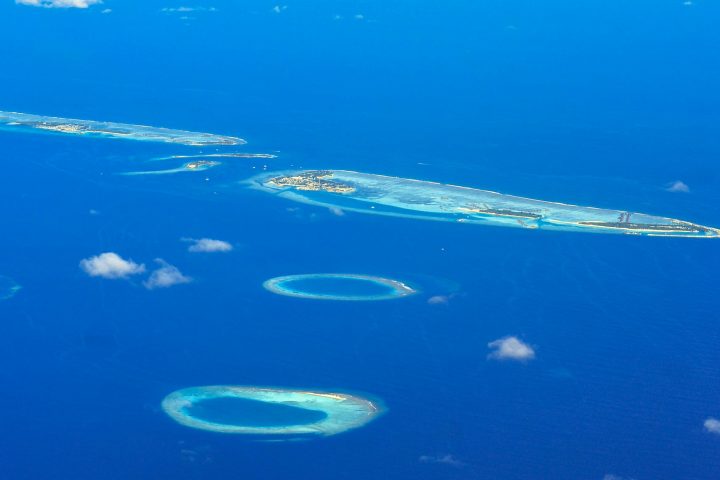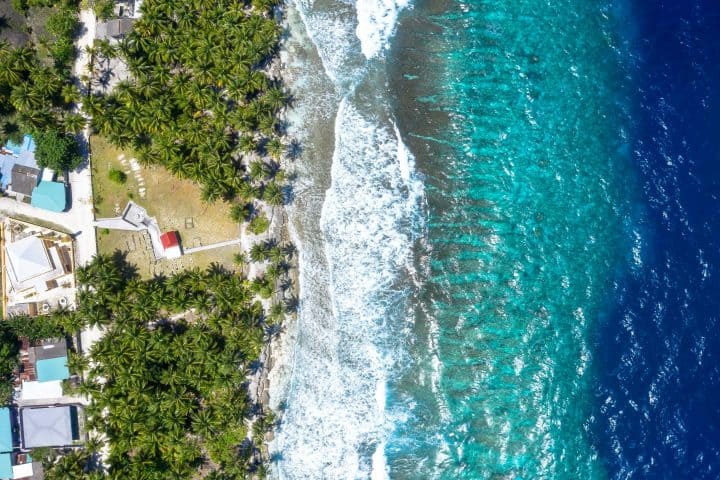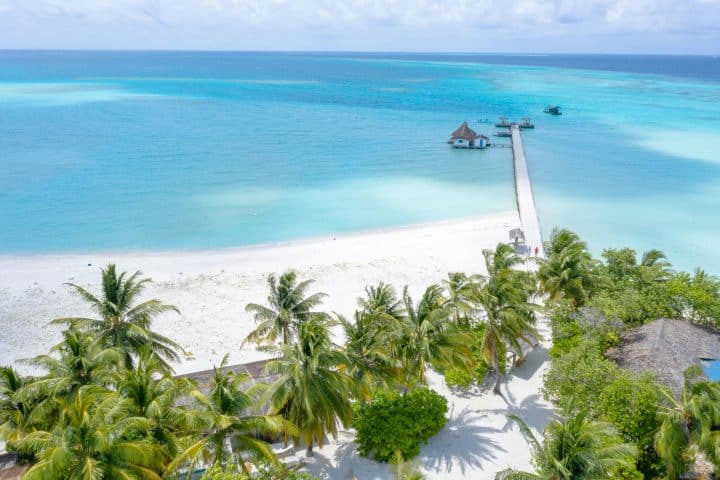

Laamu Atoll is one of the Maldives’ most distinctive southern atolls, known for its remote feel, strong reef life, and a richer historical layer than many visitors expect. Also known as Haddhunmathi Atoll, it has Fonadhoo as its administrative capital and is mostly rimmed by barrier reefs, with larger islands along its eastern and southern edges. That geography helps give Laamu a more expansive, open-water character than some of the tighter atolls farther north.
Laamu suits travelers who want the Maldives to feel scenic and refined, but also quieter and more exploratory. It is one of the atolls where you can combine remote-luxury resort style with local-island texture, reef-focused days, and a deeper sense of island history through places such as Gan, Isdhoo, and Dhanbidhoo. A natural next read here is Best Atolls in the Maldives for Different Types of Travelers.
Quick Facts
Where it is
Laamu Atoll, also known as Haddhunmathi Atoll, is in the southern Maldives and has Fonadhoo as its administrative capital. It is mostly rimmed by barrier reefs and includes larger islands along its eastern and southern sides.
Best for
Remote southern-Maldives atmosphere, diving, snorkeling, surfing, marine conservation interest, and travelers who want a stronger historical side to the trip. This is a practical summary based on Laamu’s reef profile, surf appeal, and historical sites.
Why travelers choose it
Laamu combines remote beauty with a more layered identity than many atolls, thanks to its reefs, local islands, archaeological history, and easier-than-expected access through Kadhdhoo.
What it is known for
It is known for reefs, southern surf, marine conservation, seagrass meadows, and historical islands such as Gan, Isdhoo, and Dhanbidhoo.
Marine angle
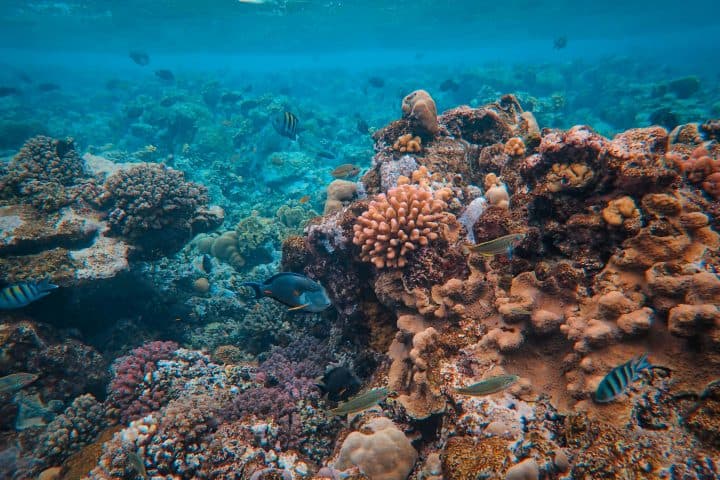
Laamu is strongly associated with reef life, manta and shark encounters in season, marine protected areas, and important seagrass habitats.
Local-island angle
Fonadhoo, Gan, Isdhoo, Dhanbidhoo, and other inhabited islands give the atoll a more grounded local side than many visitors expect.
How you get there
Laamu is commonly reached through Kadhdhoo Airport, followed by onward island transfer depending on where you stay.
Best for first-time visitors
If you want the Maldives to feel more remote and more ocean-led than the first-stop atolls, but still manageable to reach, Laamu is a very strong choice. This is a travel recommendation based on the atoll’s southern location and airport access.
What Laamu Atoll Feels Like
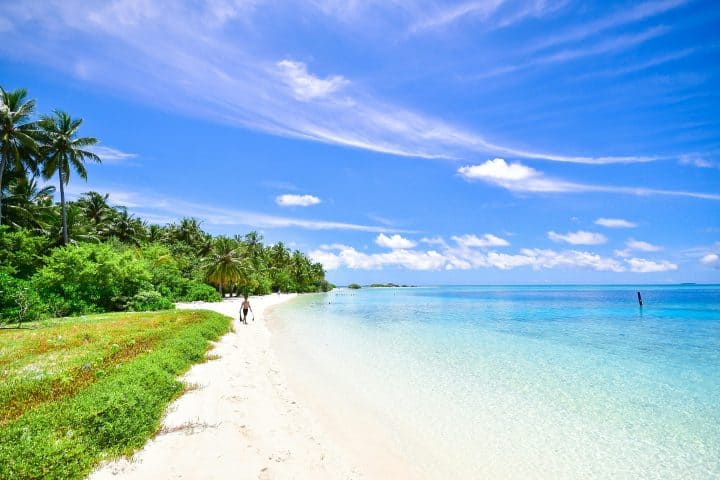
Laamu Atoll feels more remote than the atolls near Malé, but not so remote that it feels inaccessible. It is shaped by long lagoon views, reef breaks, quieter islands, and a more spacious southern-Maldives atmosphere that often appeals to travellers looking for something beyond the country’s more obvious first-stop atolls. Known for its vivid wetlands, untouched reefs, and broad appeal to snorkellers, divers, surfers, and wellness travellers, Laamu has a distinctly unspoiled feel.
That mix is a big part of why Laamu stands out. It is not only about a resort stay or only about local-island travel. It works well for travelers who want a trip shaped by the ocean, but with a more layered island identity in the background. This is a travel-planning inference based on Laamu’s marine reputation, southern setting, and mix of local islands and resort access.
Why Travelers Choose It
One reason travelers choose Laamu is that it offers a more remote island feel without becoming overly difficult to reach. Kadhdhoo Airport serves as the domestic-airport gateway to the atoll, and airline destination information places it directly in Laamu. That makes Laamu more practical than many first-time visitors assume when they see where it sits on the map.
Another reason is that Laamu has a stronger historical side than many atolls. The atoll is associated with some of the Maldives’ most important pre-Islamic archaeological remains, and islands such as Gan, Isdhoo, and Dhanbidhoo are linked to major Buddhist-era sites and old inscriptions. That gives Laamu a depth that feels very different from a resort-only escape.
Reefs, Diving and Marine Life
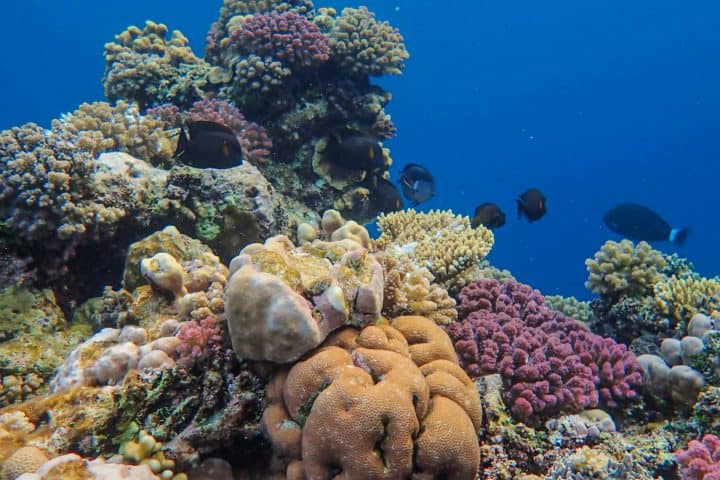
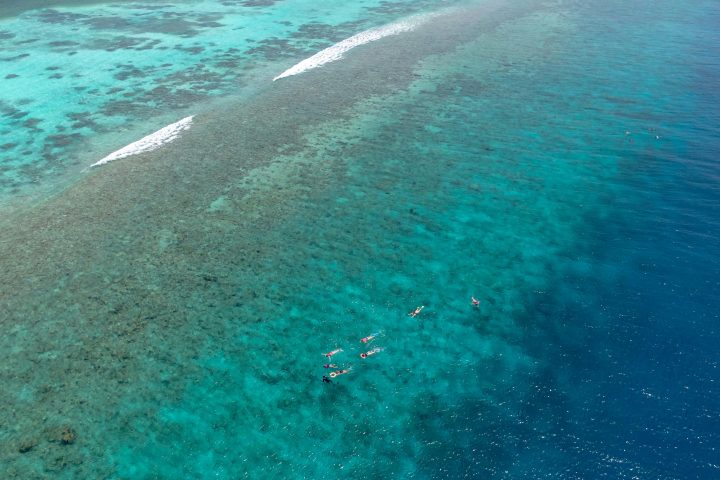
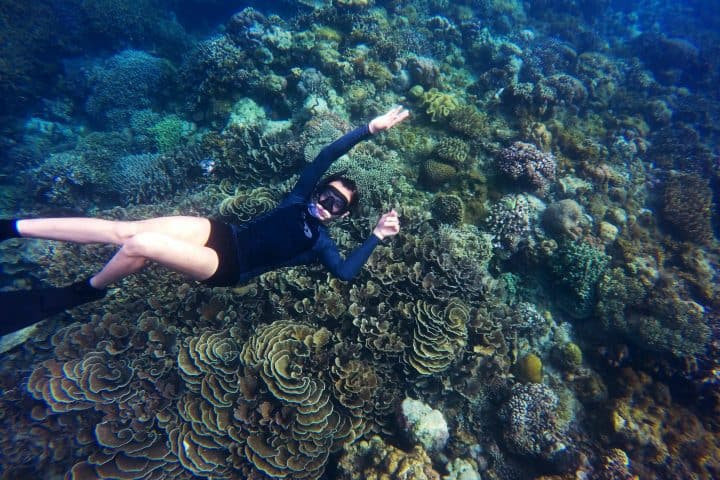
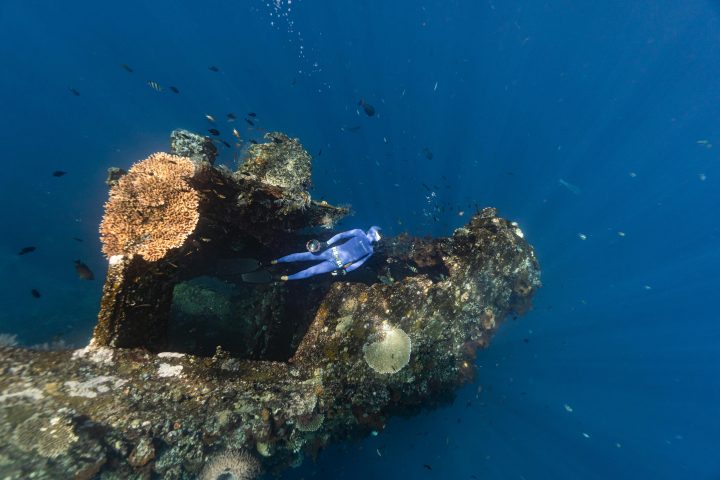
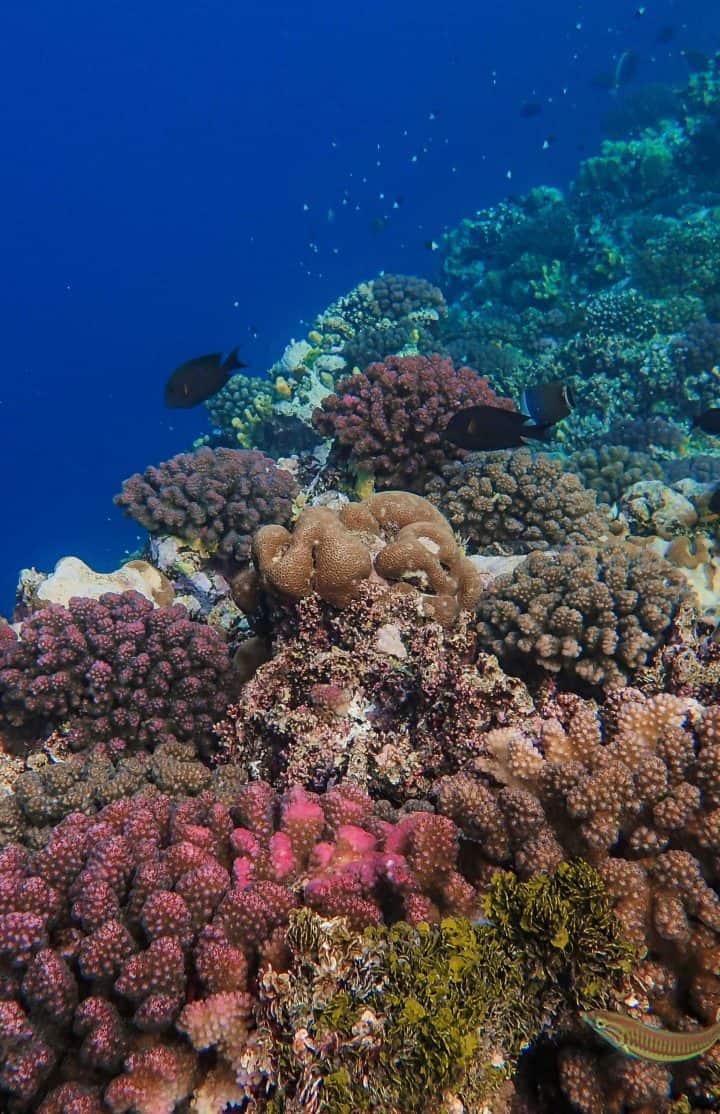
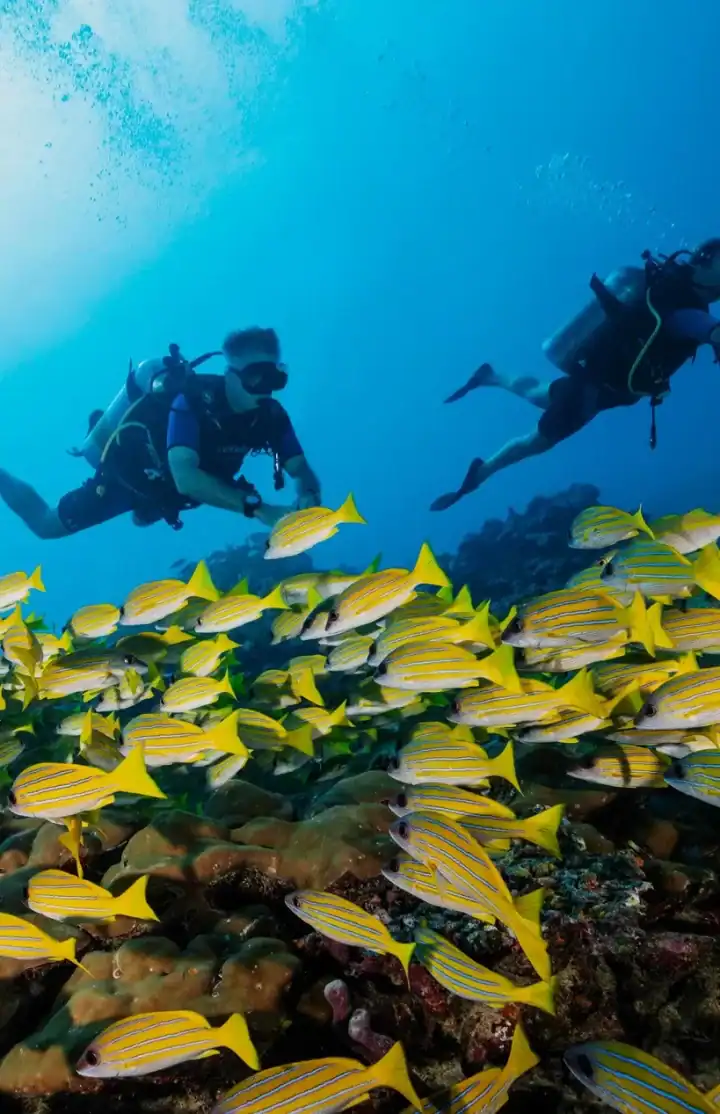
Laamu Atoll has a strong underwater reputation. PADI notes that the atoll offers warm water year-round and particularly rewarding diving from November to April for calmer seas and stronger visibility, while May to October brings more nutrient-rich water and increased chances of manta rays and sharks. That gives the atoll appeal across different seasons rather than only one narrow dive window.
Laamu is also closely associated with marine conservation. The atoll is home to important marine research and conservation work, and several naturally distinctive, eco-rich areas have been designated as Marine Protected Areas. Separate research on Laamu’s seagrass meadows has also recorded rich fish life, including many juveniles, which helps explain why the atoll feels especially strong for reef life and marine-focused stays.
Surf, Seagrass and a Different Ocean Feel
Laamu is not only about diving. It also has a surf side and a more ecological identity than many first-time visitors expect. Recent travel coverage describes Laamu as a place where travellers can surf in clear southern waters while still feeling far from the busier wave zones of the central atolls, and the atoll is also strongly associated with wellness, snorkelling, and diving.
The atoll’s seagrass meadows are another important part of its character. They are not always the most photogenic part of a lagoon for casual visitors, but they support fish nurseries and wider marine ecosystems in ways that make Laamu especially interesting for travelers who care about the environment as much as the scenery.
Local Islands and Historical Side
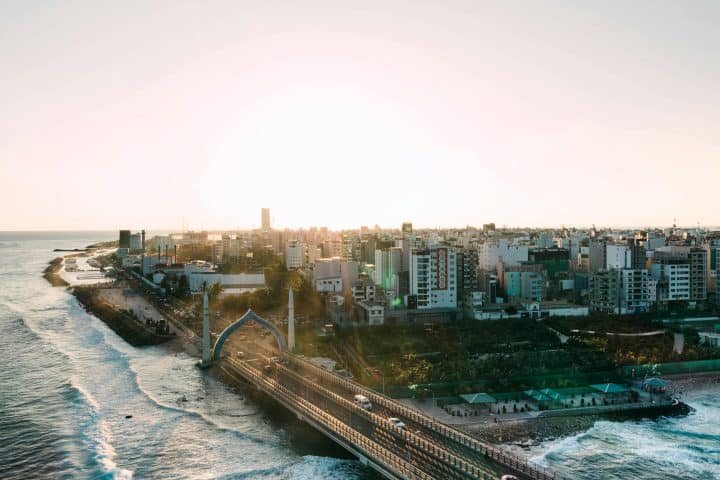
The local-island side of Laamu is one of its biggest strengths. Fonadhoo is the administrative capital, while inhabited islands in the atoll include places such as Dhanbidhoo, Fonadhoo, Gaadhoo, Gan, Hithadhoo, Isdhoo, Kalaidhoo, Kunahandhoo, Maabaidhoo, Maamendhoo, Maavah, Mundoo, Maandhoo, and Kadhdhoo. That gives the atoll a much more lived-in feel than a destination shaped only by private-island resorts.
Gan is especially notable because travel listings describe it as a place with old Buddhist temple ruins and even a freshwater lake, while Dhanbidhoo and Isdhoo are connected to major early historical remains in the Maldives. For travelers, this means Laamu can feel culturally richer than many atolls whose identity is centered almost entirely on beaches and villas.
How You Get There
Laamu Atoll is commonly reached through Kadhdhoo Airport (KDO). Maldivian identifies Kadhdhoo as the domestic-airport island of Laamu, and airport information places it only a short distance from Fonadhoo. From there, the onward journey continues by boat or road transfer depending on the island.
In practical terms, Laamu sits in an appealing middle ground. It is far enough south to feel removed from the standard Malé-area trip, but it is still manageable enough to work well for travelers who want a quieter, more distinctive atoll without choosing somewhere so remote that the journey overwhelms the stay. This is a travel-planning inference based on Kadhdhoo access and the atoll’s southern position.
Who Laamu Atoll Suits Best
Laamu Atoll suits travelers who want a remote southern-Maldives feel, especially divers, surfers, marine-life-focused travelers, and repeat visitors who want to see a more layered side of the country. It is also a strong fit for visitors who like the idea of combining polished resort comfort with local-island history and a more exploratory atmosphere. This is a planning inference based on Laamu’s reef profile, surf appeal, conservation focus, and archaeological significance.
Travelers whose only priority is the shortest and easiest arrival may still prefer the Malé atolls. But for those who want the Maldives to feel more expansive, more ocean-led, and more rooted in island history, Laamu is one of the most rewarding atolls to consider. This is also a planning inference based on Laamu’s location, transport profile, and overall destination character.
FAQs
Is Laamu Atoll easy to reach?
Yes. Laamu is easier to reach than many travelers expect because Kadhdhoo Airport serves as the domestic-airport gateway to the atoll.
What is Laamu Atoll best known for?
It is best known for reefs, surf, marine conservation, seagrass habitats, and a stronger historical layer than many other atolls.
Is Laamu good for diving?
Yes. Laamu has a strong dive reputation, with warm water year-round and seasonal conditions that support both visibility and larger marine encounters.
Is Laamu good for surfing?
Yes. Recent travel coverage highlights Laamu as a southern surf destination with a calmer, more remote feel than some of the better-known central surf zones.
Are there local islands in Laamu Atoll?
Yes. The atoll includes many inhabited islands, including Fonadhoo, Gan, Isdhoo, Dhanbidhoo, Kadhdhoo, Maavah, and others.
Who should choose Laamu over another atoll?
Laamu is a strong choice for travelers who want reefs, marine life, southern remoteness, and a Maldives trip with more depth and island history in the background. This is a planning inference based on the atoll’s conservation profile, surf and dive appeal, and historical sites.
Explore Resorts in Laamu Atoll
If you want to turn this guide into stay planning, continue with Top Maldives Resorts in Laamu Atoll.
Found 4 properties on
Laamu Atoll
Related Guides