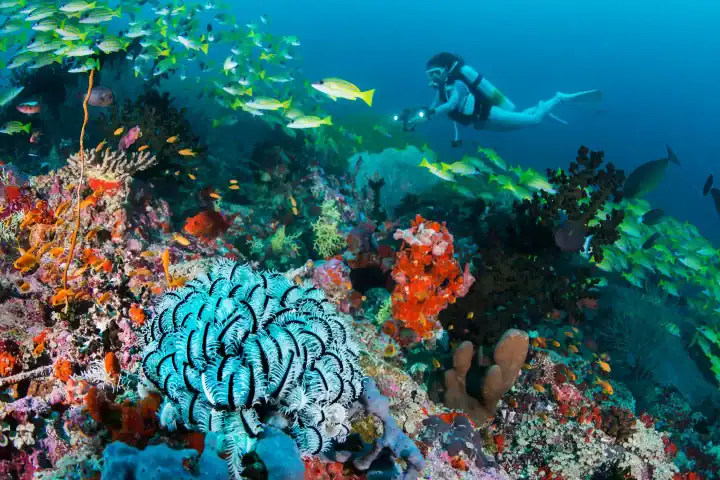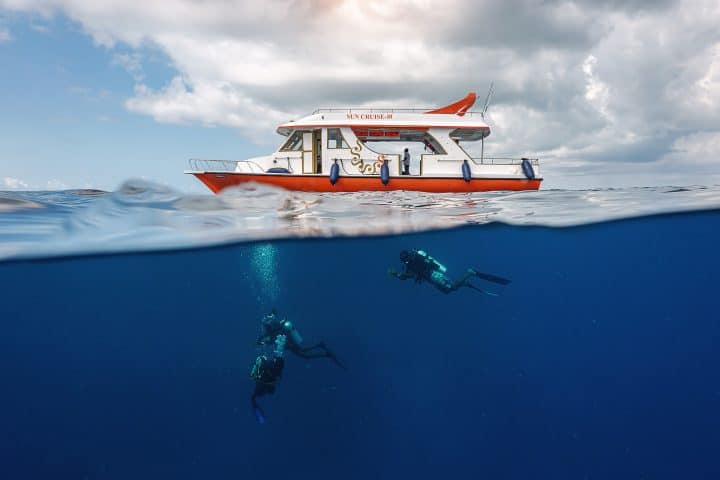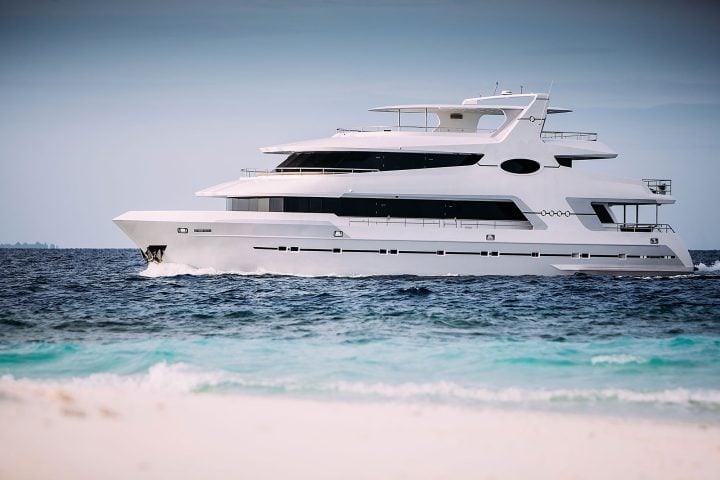


Best Liveaboard Routes in the Maldives depends on what you want to see underwater and how adventurous you want the trip to feel. The Maldives officially treats safari vessels as one of its tourist accommodation types, and current tourism data shows they are a meaningful part of the country’s bed capacity, so liveaboards are a well-established way to explore the atolls rather than a niche add-on.
For most travelers, the main route families are Central Atolls, Central Atolls with Baa, Northern Atolls, and the more advanced Central & Southern / Far South routes. Operator itineraries consistently group the Maldives this way, with Central Atolls covering the classic Malé–Ari–Rasdhoo core, Baa itineraries adding manta-focused northern extensions, Northern Atolls pushing farther into less-visited waters, and Far South routes focusing on deep channels, stronger currents, and more experienced divers.
Route quick guide
Best for a first Maldives liveaboard
Choose the Central Atolls route. It usually covers North Malé, South Malé, Rasdhoo, and North/South Ari, which makes it the classic all-round itinerary.
Best for manta-focused trips
Choose Central Atolls & Baa. Master Liveaboards’ itinerary says this route combines North Malé, North Ari, and Baa, with some 10-night trips also adding Lhaviyani if conditions allow.
Best for remote exploration
Choose the Northern Atolls. This route reaches areas such as Baa, Raa, Shaviyani, Haa Dhaalu, and Haa Alifu, which are farther from the standard central circuit.
Best for experienced divers
Choose the Far South or Central & Southern routes. Master’s Far South itinerary says these routes are not suitable for entry-level divers and involve channel and wall diving with stronger currents.
Central Atolls is the classic all-round route
If you are unsure where to start, Central Atolls is usually the safest answer. This itinerary covers North and South Malé, Rasdhoo, and North and South Ari, which puts you in the heart of the Maldives’ best-known diving region. A number of travel operators also treat this as the standard Maldives liveaboard route because it packs major sites into a relatively efficient geography.
This route is usually best for travelers who want a bit of everything rather than one very specific marine-life goal. It suits first-time liveaboard guests, classic Maldives dive expectations, and trips where you want strong variety without committing to the more advanced southern-style itineraries. That second sentence is an inference from the route coverage and how consistently operators position Central Atolls as the core itinerary.
Central Atolls with Baa is strong for manta season
If manta rays are high on your wish list, a Baa extension is well worth considering. Some itineraries combine North Malé, North Ari, and Baa, while longer routes may also include Lhaviyani. Because Baa Atoll often sits outside the main central route, it is usually added more deliberately for trips with a stronger manta focus.
This kind of route is usually most appealing for travellers who want a central-Maldives journey with a stronger marine-life angle rather than a purely classic circuit. It is especially relevant when your travel dates line up with Baa’s manta season, rather than when you simply want the easiest year-round route.
Northern Atolls feels more remote
The Northern Atolls route is usually for travelers who want to move beyond the standard central circuit. Its Northern Atolls itinerary includes North Malé, Baa, Raa, Shaviyani, Haa Dhaalu, and Haa Alifu, with expected sightings including sharks, eagle rays, tuna, and Napoleon wrasse.
This kind of route is usually better for repeat Maldives divers or travelers who value remoteness and route variety over ticking off the most famous central sites. That is an inference from the much wider geographic spread and the operator positioning of the itinerary as a northern-region adventure.
Far South is for more experienced divers
The Far South and Central & Southern routes are where the Maldives starts to feel more demanding. These itineraries are generally less suited to entry-level divers, as many dives take place around deeper channels and walls, and the diving style often involves drift dives, negative entries, and comfort in stronger currents.
That makes the southern routes a better fit for divers who already know they are confident in current and are actively looking for a more advanced itinerary. For newer liveaboard guests, Central Atolls is usually the more approachable starting point.
How to choose the right route
The easiest way to choose among the Best Liveaboard Routes in the Maldives is to decide what matters most: variety, manta season, remoteness, or challenge level. If you want the classic Maldives route, go Central. If you want a manta-led extension, look at Baa itineraries. If you want something less standard, go North. If you are an experienced diver looking for stronger current and a more advanced feel, go South.
It also helps to remember that routes can shift with weather and sea conditions, and operators explicitly state that site order and even some atoll coverage may change from trip to trip. So route names are best treated as a planning framework, not an exact fixed script.
Final thoughts
Best Liveaboard Routes in the Maldives is really about matching the itinerary to your diving style. Central Atolls is the classic all-rounder, Baa routes suit manta-focused trips, Northern routes feel more exploratory, and Far South is better for divers who already know they want a more advanced challenge.
FAQs
Which Maldives liveaboard route is best for first-timers?
Usually Central Atolls, because it covers the best-known core atolls without the advanced-diver emphasis of the far south.
Which route is best for manta rays?
Usually Central Atolls & Baa, because Baa is commonly added specifically for manta-focused itineraries.
Which route is best for experienced divers?
Usually Far South or Central & Southern, because operators describe these as current-heavy and not ideal for entry-level divers.
Are Maldives liveaboard routes fixed?
No. Routes, sites, and even some atoll coverage can change depending on weather, sea conditions, and itinerary length.
Related Blogs